
Consumers Aren’t Just Searching—They’re Deciding
In today’s digital world, consumers no longer “search” in the traditional sense. They’re deciding—rapidly, emotionally, and often in places many marketers aren’t even considering. A TikTok comment. A Reddit thread. A ChatGPT answer. A friend’s Amazon review. A half-watched YouTube video. These are today’s decision-making touchpoints.
If you’re still optimizing your content only for search rankings and keyword density—thinking that’s the path to visibility and conversions—you’re not just behind—you’re invisible.
This isn’t about doing more. It’s about doing differently. It’s about showing up exactly where people make decisions, not just where they search.
The End of Traditional SEO (And Why It’s Not Your Fault)
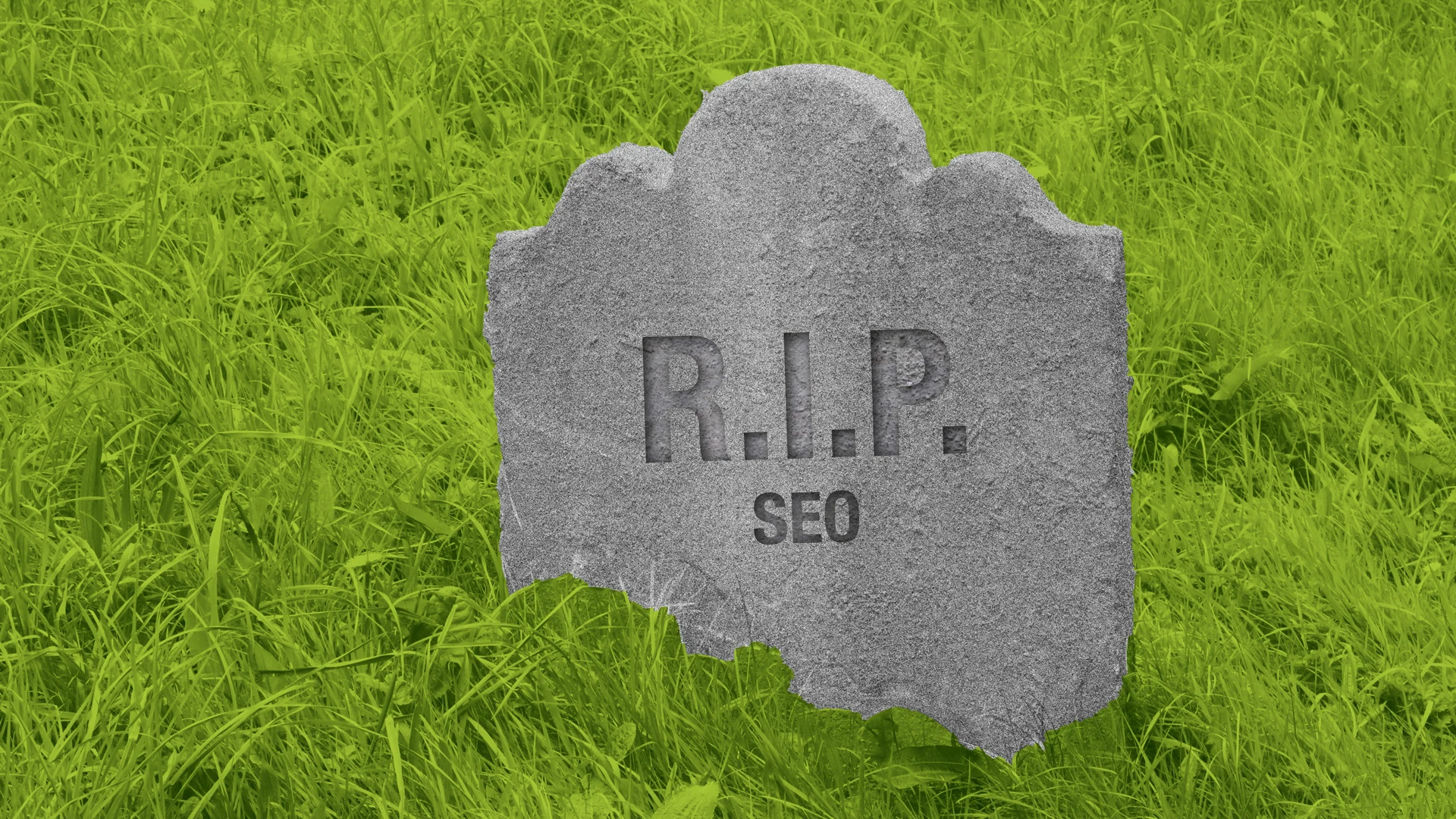
Let’s be clear: SEO isn’t dead. But traditional SEO—the kind that obsesses over Google rankings, meta descriptions, backlinks, and page load speed—is no longer enough.
For years, Google was the gateway to the internet. If your business wasn’t on page one, you didn’t exist. And so marketers built entire ecosystems around Google’s algorithm.
But here’s the problem: even if you’re still “winning” on Google, you may be losing customers.
Google processes about 13.7 billion searches per day. That’s impressive. But that’s only 27% of total search activity on the internet.
Where’s the other 73% happening?
TikTok
Reddit
YouTube
Instagram
Amazon
ChatGPT and AI chatbots
These are the new search engines. And even more importantly, they’re the new decision engines.
Welcome to the Google Trap
We call this outdated way of thinking the Google Trap.
It’s when businesses optimize only for Google visibility—while their customers are making decisions elsewhere.
Your traffic might look fine. Your rankings may be steady. But conversions are flat, sales are stagnant, and customer engagement is underwhelming.
Why? Because you’re showing up in search—but you’re missing the decision.
The Modern Consumer Journey Isn’t Linear—It’s Fragmented
Today’s consumer journey is not a funnel. It’s not even a journey. It’s a chaotic web of rapid-fire micro-decisions happening across multiple platforms, often within minutes.
From a neuromarketing perspective, these moments trigger different psychological responses:
What to click? → Google
What to trust? → Reddit, Amazon
What to try? → App store ratings, YouTube reviews
What to buy? → TikTok Shops, Instagram stories
What to believe? → ChatGPT, Claude, YouTube explainers
Who to follow? → LinkedIn, Instagram
Each platform serves a different psychological function. And they’re not happening in a linear sequence. They’re happening simultaneously.
A user might:
See your product on TikTok
Validate it on Reddit
Ask ChatGPT for alternatives
Read reviews on Amazon
Then buy—without ever visiting your website
You’re not part of the conversation if you’re not showing up at each of those moments. You’re invisible.
Search Everywhere Optimization (SEO 2.0)
The solution? Search Everywhere Optimization—or SEO 2.0.
This strategy is precisely what it sounds like: instead of optimizing for just one search engine, you optimize your brand presence across all platforms where decisions get made.
Think of it like this:
Traditional SEO = Get found on Google
Search Everywhere Optimization = Get chosen across the internet
It’s not about being everywhere. It’s about being trusted somewhere that matters.
Don’t Just Create Content—Create Validation
Most marketers confuse visibility with validation.
Visibility is getting views, clicks, and engagement.
Validation is being cited, referenced, trusted, and chosen.
Here’s the difference:
Visibility is having a TikTok account.
Validation is someone tagging your brand in their own TikTok.
Visibility is ranking on Google.
ChatGPT is citing validation in a recommendation.
In an AI-driven world, validation beats visibility. AI doesn’t scroll. It summarizes. And it references trusted sources.
You don’t exist in the decision-making moment if you’re not cited in AI responses, reviewed on Amazon, or mentioned on Reddit.
Each Platform Has a Unique “Decision Code”
You can’t apply the same strategy to every platform. Each one requires its own content psychology, format, and engagement model.
Let’s break down a few:
TikTok: Fast, emotional, and novel. Users decide in seconds. Use storytelling, visual triggers, and emotional resonance.
YouTube: Long-form, educational, authoritative. Users want proof and depth. Use structured content, visual explanations, and social proof.
ChatGPT & AI: Clarity, citations, authority. AI responds best to semantically rich, clearly structured, and well-cited information.
Reddit: Raw authenticity. No fluff, no marketing speak. Real users. Real opinions. Real conversations.
Amazon: Social proof at scale. Reviews speak louder than product descriptions.
Instagram: Aspirational identity. People want to become someone through what they buy.
Visibility Gets You Seen. Validation Gets You Chosen.
To influence modern consumers, you need to earn trust signals across platforms:
Reviews on Amazon
Mentions in Reddit threads
Citations in blog posts or academic articles
Expert tags on YouTube
Trusted answers in ChatGPT responses
These aren’t “SEO tactics.” They’re reputation signals—AI uses them to decide who gets surfaced and who gets skipped.
The RICE Method: Prioritize Without Overwhelm
You don’t need to be on every platform. You need to be trusted on the right ones.
Use the RICE method to choose where to show up:
R: Reach – How many users are on the platform?
I: Impact – How much could this move your business?
C: Confidence – Can you succeed on this platform?
E: Ease – How simple can you create content here?
Score each platform from 1 to 10, multiply the results, and focus on the top 2 to 3 platforms first.
Compounding Trust Across Platforms
Here’s the power of Search Everywhere Optimization: trust compounds.
A Reddit thread gets indexed by Google
A ChatGPT citation increases brand authority
A YouTube video builds proof that Amazon reviews reinforce
Each platform reinforces the others. Once you gain trust on one, it echoes across the ecosystem.
This isn’t about being everywhere. It’s about being interconnected—woven into the way people think, decide, and buy.
Why Now Is the Time to Act
Your competitors are still stuck in the Google game. They’re optimizing for algorithms that don’t reflect how people actually make decisions today.
This gives you a massive opportunity:
To earn trust where others aren’t looking
To appear in AI answers before your competition
To be cited, validated, and chosen—everywhere it matters
Start with one platform beyond Google. Maybe it’s Reddit, TikTok, or ChatGPT. Focus on building trust there.
Then expand. Build a reputation web. Let AI and human decision-makers amplify your brand for you.
Final Thought: Don’t Just Play the Old Game Better—Play a New Game Altogether
Traditional SEO is no longer a full strategy. It’s a starting point. The real game is happening elsewhere—across AI tools, community platforms, review sites, and micro-moments of digital influence.
Search Everywhere Optimization is the future of digital marketing. It’s how modern brands win attention, trust, and sales in a fragmented, AI-curated world.
Start now. Optimize not just for clicks—but for choices.
And most importantly, optimize not just for Google—but for everywhere decisions get made.
Summary: The New Rules of SEO in an AI-Driven World
Search Everywhere Optimization represents a paradigm shift in digital marketing. Consumers no longer follow a linear search path; instead, they make decisions across fragmented platforms like TikTok, Reddit, Amazon, and AI tools like ChatGPT. Traditional SEO, while still useful, fails to capture the full scope of modern decision-making behavior. To remain relevant, brands must be cited, validated, and trusted across platforms—not just visible on Google. Success is no longer about reach alone; it’s about resonance and relevance in decision moments.
Frequently Asked Questions (FAQ)
1. What is Search Everywhere Optimization?
Search Everywhere Optimization is a modern marketing strategy focusing on building brand presence and trust across all platforms where consumers make decisions—not just search engines.
2. Is SEO still relevant today?
Yes, but only as one part of a broader strategy. Traditional SEO gets you found on Google, while Search Everywhere Optimization ensures you’re chosen across multiple platforms.
3. Do I need to be active on every platform?
No. Based on your resources and audience, focus on 2–3 platforms using the RICE method—Reach, Impact, Confidence, Ease—to prioritize.
4. How does AI like ChatGPT affect SEO?
AI tools summarize and recommend based on trusted citations and signals. You won’t appear in AI-generated results if your brand isn’t mentioned or validated across platforms.
5. How do I start implementing this strategy?
Identify where your customers validate decisions—Reddit, Amazon, YouTube, etc.—and start earning trust there. Then expand strategically based on results.
6. What’s the biggest mistake brands make today?
Treating all platforms the same. Each platform has its own psychology and content format. Success comes from platform-specific strategies, not repurposed content.
7. Can small businesses apply this too?
Absolutely. You don’t need to dominate every platform—just be trusted where it matters most to your audience.
About The Author